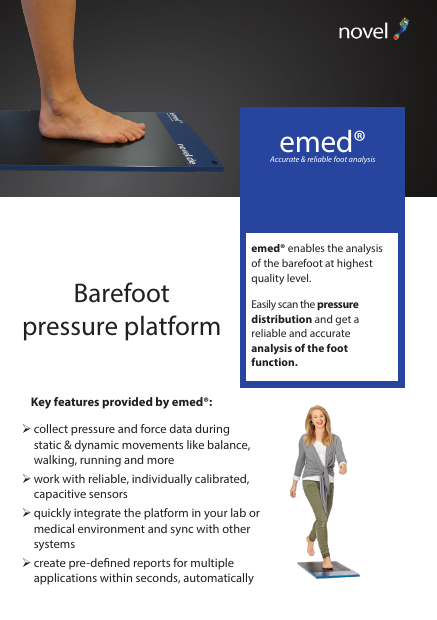
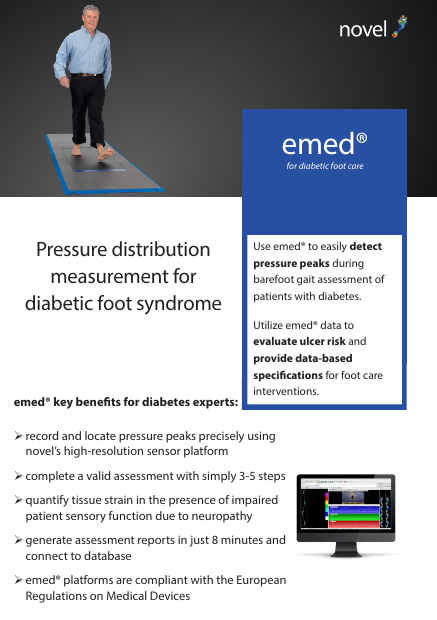
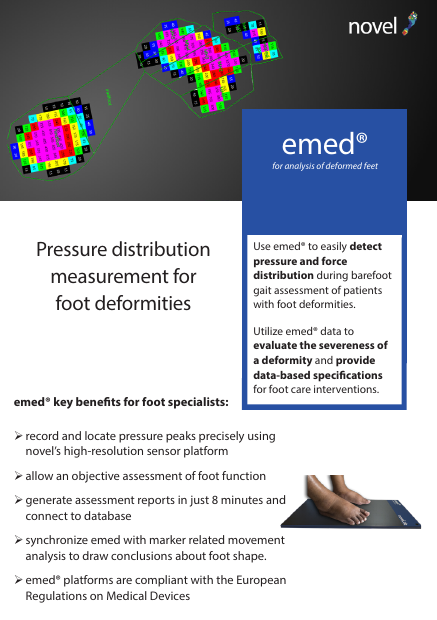
emed®
Plantar pressure platform
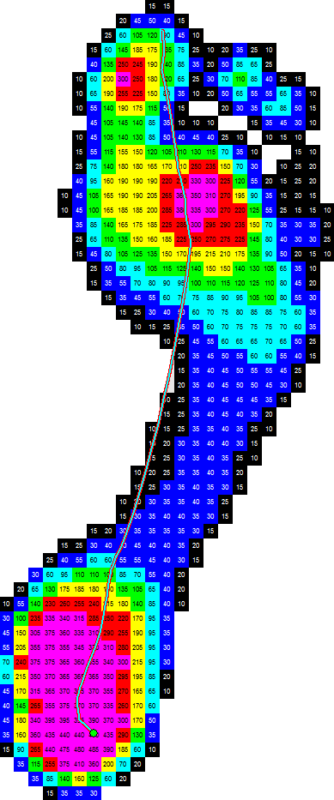
- Detailed pressure distribution
- Barefoot measurement
- Clinical and research workflows

Scientific Explanation
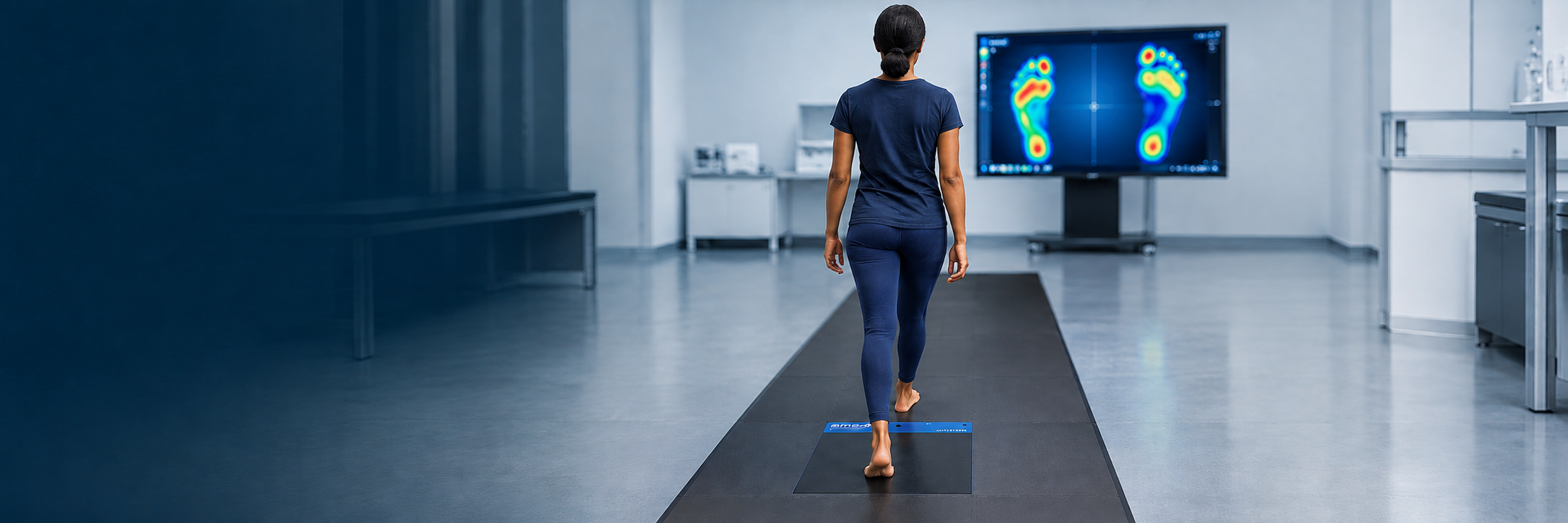
Ground reaction force tells you how much force is applied. Plantar pressure shows where that force is distributed across the foot.
emed records the barefoot pressure pattern with a calibrated capacitive sensor matrix, making local peaks, left-right differences and rollover behavior easier to interpret.
Measurement Method
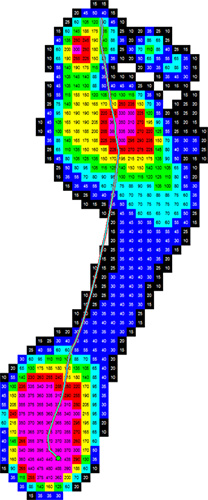
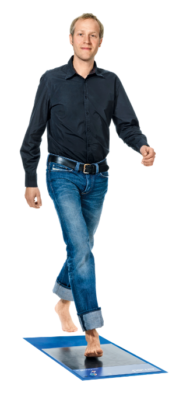
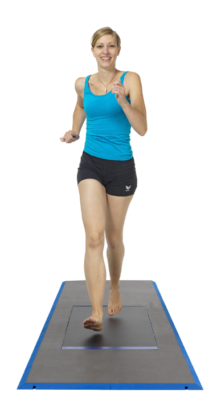
The subject walks naturally across the platform. Thousands of individually calibrated capacitive sensors record pressure under the plantar surface during stance, walking or running.
The result is a dynamic pressure map with quantitative data on pressure, force, contact area and spatiotemporal parameters.
Comparison
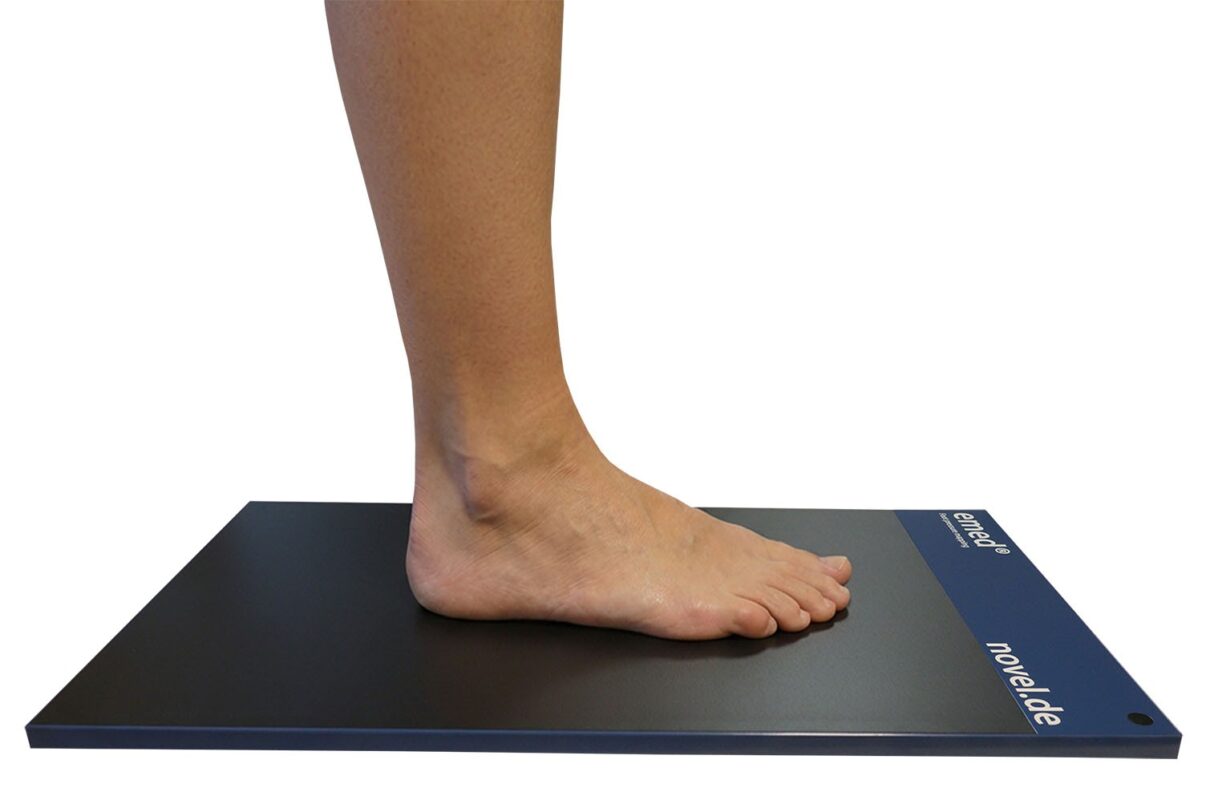
Each measurement method answers a different question. emed is the right tool when barefoot pressure distribution, force and contact area need to be measured together.
Learn more about the platforms →Plantar pressure platform
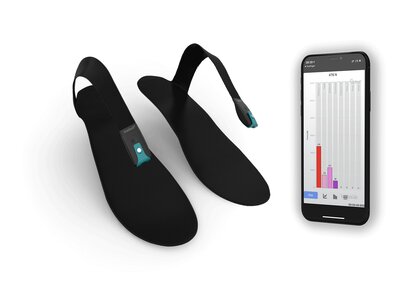
In-shoe pressure measurement
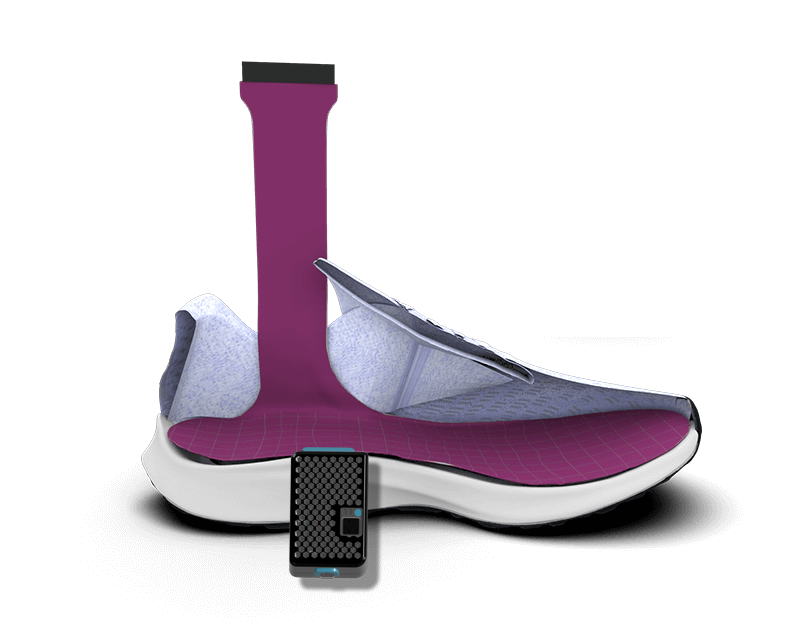
In-shoe force measurement
Evidence
emed is used across biomechanics, diabetic-foot research, orthopedics, pediatrics, sports medicine and rehabilitation. Its value is the combination of reliable pressure maps with repeatable reporting.
80 journal articles from 2000 to 2026.
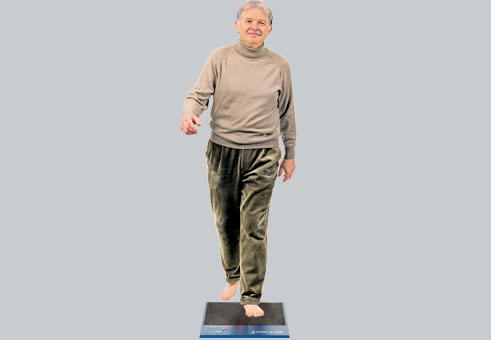
Plantar pressure patterns, ulcer risk and offloading strategies.
Functional differences in pes planus, pes cavus and related patterns.
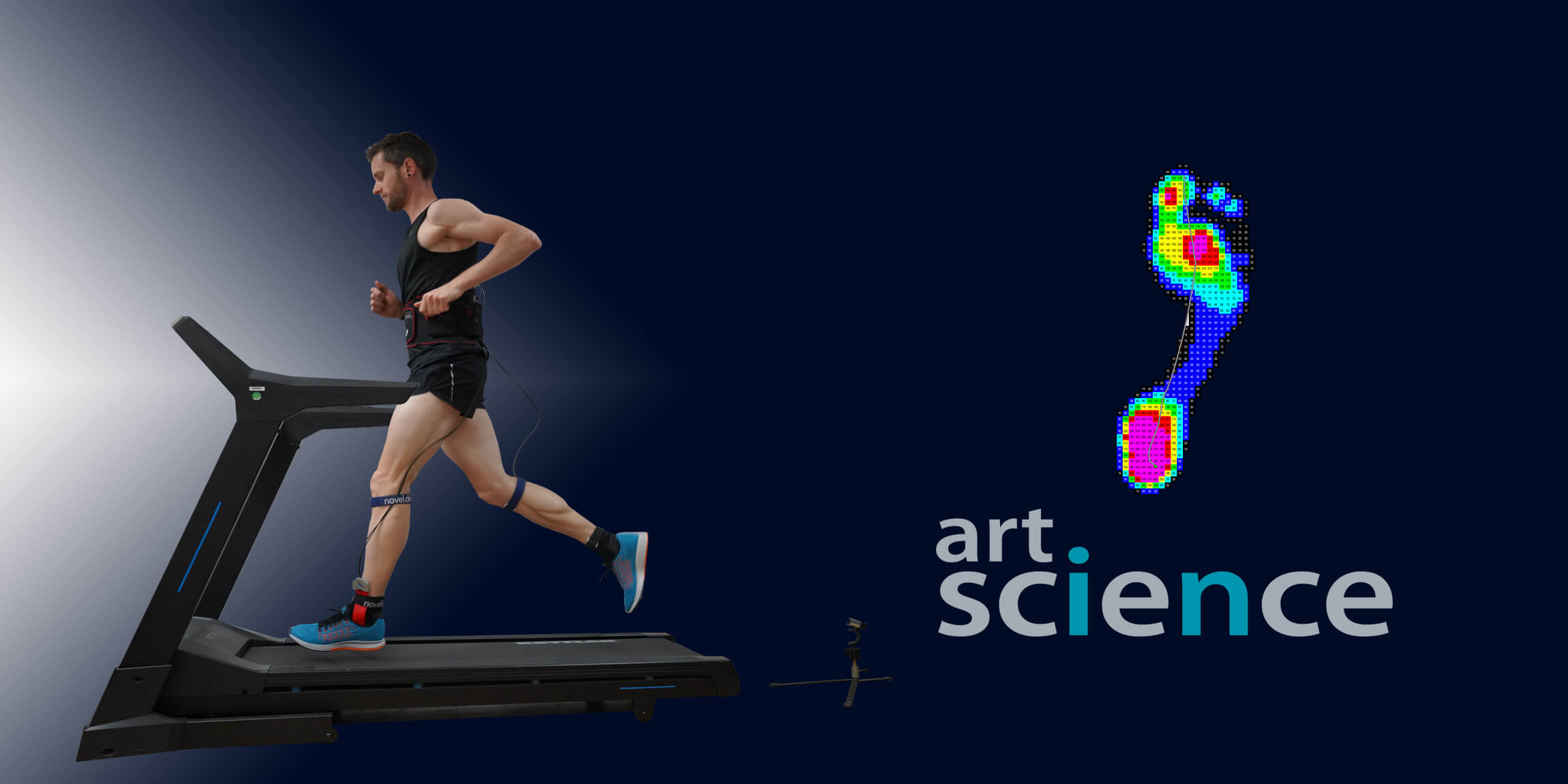
Gait analysis, performance questions and injury prevention.
Applications
emed supports barefoot pressure-distribution assessment wherever local loading, gait pattern and foot function need to be understood together.
Map load transfer in flatfoot, high arch, pronation and forefoot patterns.
Find high-pressure regions and guide offloading, footwear and orthotic decisions.
Compare walking or running pressure patterns for performance and injury questions.
Track weight-bearing and pressure redistribution through recovery.
Document flatfoot, toe-walking, asymmetry and uneven stride patterns.
Compare arthritis-related pressure changes and support strategies over time.
Review altered rollover, imbalance and asymmetric loading patterns.
Assess pressure patterns linked to pain, balance changes and mobility limits.
Tune insoles and footwear using region-specific pressure data.
Monitor how body weight and gait changes influence plantar load.
The Product
emed platforms are available in two sizes. Choose the platform that fits your clinical or research workflow.
| Specification | emed® s | emed® xl |
|---|---|---|
| Pressure range | 10 - 1,270 kPa | 10 - 1,270 kPa |
| Dimensions | 690 x 400 x 21 mm | 1,529 x 504 x 21 mm |
| Sensor area | 540 x 320 mm | 1,440 x 440 mm |
| Sensors | 6,912 | 25,344 |
| Resolution | 4 sensors/cm2 | 4 sensors/cm2 |
| Frequency | 120 Hz | 100 Hz |
| Accuracy | ± 5% ZAS | ± 5% ZAS |
| Temperature range | 15 - 40°C | 15 - 40°C |
| Synchronization | sync-out/in | sync-out/in |
Both platforms measure calibrated pressure, force and contact area. The emed-xl also provides spatiotemporal parameters. ZAS means zero at start.
Our experts can help you find the right emed configuration for your assessment or research workflow.